
Civil engineers are trained to trust concrete. Yet on tropical coastlines, the structure outperforming seawalls costs nothing to build and repairs itself: the mangrove forest. A sufficiently wide belt of mangroves can absorb up to three-quarters of incoming wave energy, blunting storm surges that would overtop hard defences — while also doing three or four other jobs that concrete cannot do at any price.
The physics live in the root system. Mangrove roots, pneumatophores and tangled prop legs create drag through the whole water column, forcing waves to spend their energy pushing through a forest instead of striking a wall. Post-tsunami and post-cyclone assessments across Asia repeatedly found villages behind intact mangrove belts suffering less damage than those behind cleared shores — evidence compiled by programmes of the UN Environment Programme and widely cited in coastal planning guidance. Indian coverage, including on scopearth.com.in, has followed the Sundarbans and Odisha coasts, where the lesson was bought dearly in past super-cyclones.
The co-benefits stack up
Mangrove soils are among the most carbon-dense stores on Earth, burying carbon for millennia in waterlogged mud — ‘blue carbon’ that is released in a rush when forests are cleared for shrimp ponds or development. The root tangle is also a fish nursery: a significant share of tropical commercial fish species spend their youth in mangroves, meaning the forest is simultaneously a sea wall, a carbon vault and a fishing industry subsidy.
Economists who have run the numbers put mangrove flood-protection benefits in the tens of billions of dollars globally per year, before counting fisheries and carbon. Restoration, where hydrology is right, is often as simple as removing what blocks the tides and letting natural regeneration work.
Planting is not the same as restoring
India’s mangrove story carries both halves of the lesson. The Sundarbans shield Kolkata and millions of delta residents, and villages there credit the forest with lives saved in successive cyclones — while stretches of coast where mangroves were cleared for development have paid for the lesson in erosion and storm damage. State programmes now pay for planting and protection, and carbon finance is beginning to reward the communities who guard the trees rather than clear them.
The science has one more frontier: migration. As seas rise, mangroves need somewhere to go — low land behind them to colonise. Where roads and embankments block that retreat, the forest drowns in place, a phenomenon researchers call coastal squeeze. Protecting the mangrove’s future therefore means planning the land behind it today. The cheapest coastal defence we have still needs defending itself — with space, with law, and with the recognition that a forest is infrastructure that happens to be alive.
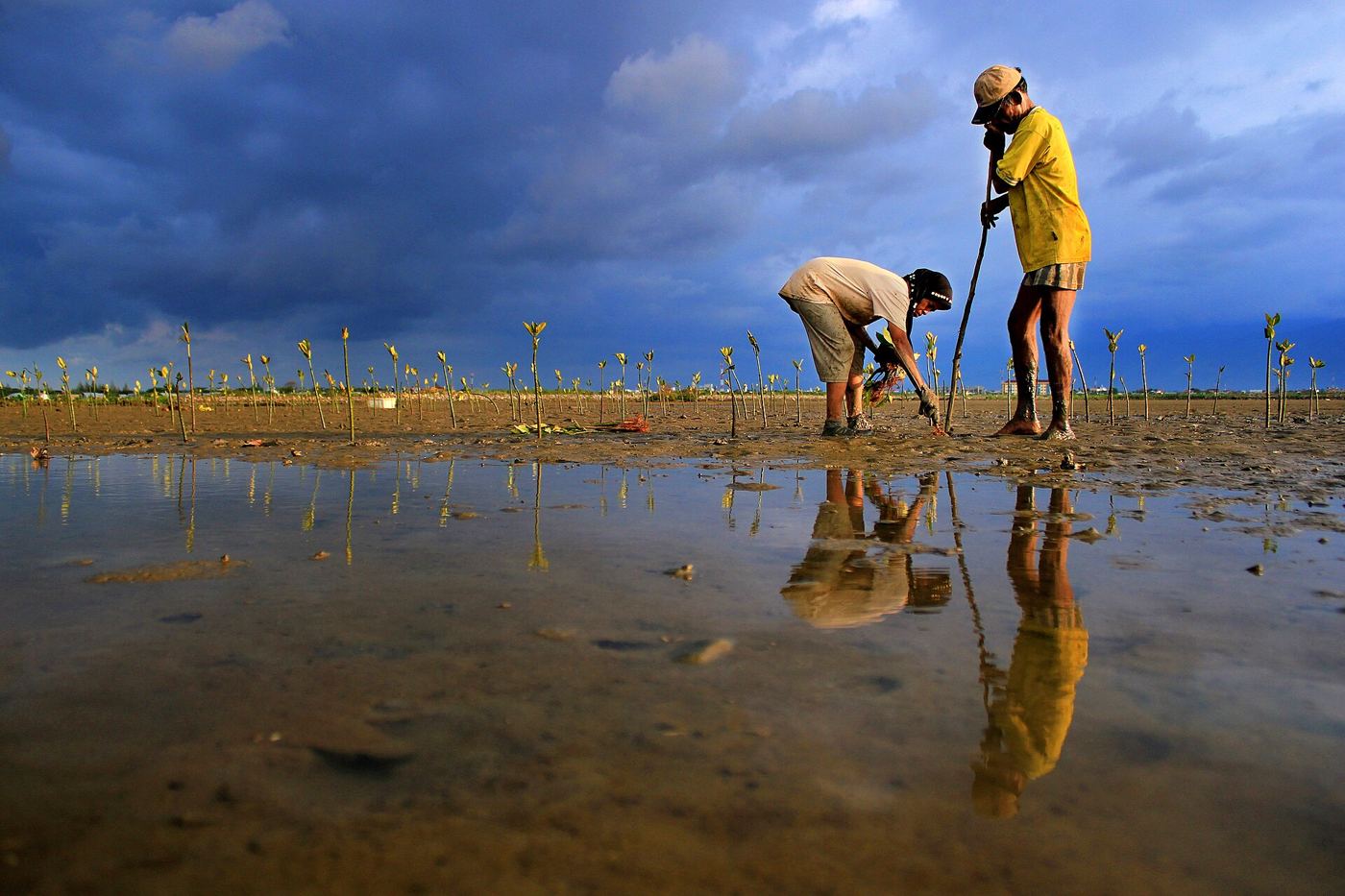
The field’s hard lesson is that planting seedlings in the wrong mud — the photogenic kind of mangrove project — mostly produces dead seedlings. Successful restoration fixes water flow first and lets the forest plant itself. Where that discipline holds, the green wall grows, thickens and keeps pace with modest sea-level rise by trapping sediment. On a warming planet with rising seas, the cheapest coastal defence ever devised turns out to be the one that grows.
